I. Pre-construction Preparation
Base Layer Treatment
The base layer must be flat, firm, and dry (moisture content is usually ≤9%, which can be tested by the "film covering method": no condensation on the base layer after covering it with a membrane for 24 hours). It should be free of defects such as looseness, sanding, cracks, or hollowing; otherwise, repairs are needed (fill cracks with sealant, and apply interface agent to sanded areas).
The surface of the base layer must be thoroughly cleaned to remove debris, oil stains, and floating dust. Internal and external corners should be made into rounded corners (with a radius of over 50mm) or obtuse angles. Nodes such as pipe roots and floor drains need to be rounded in advance to facilitate membrane adhesion.
Material Inspection
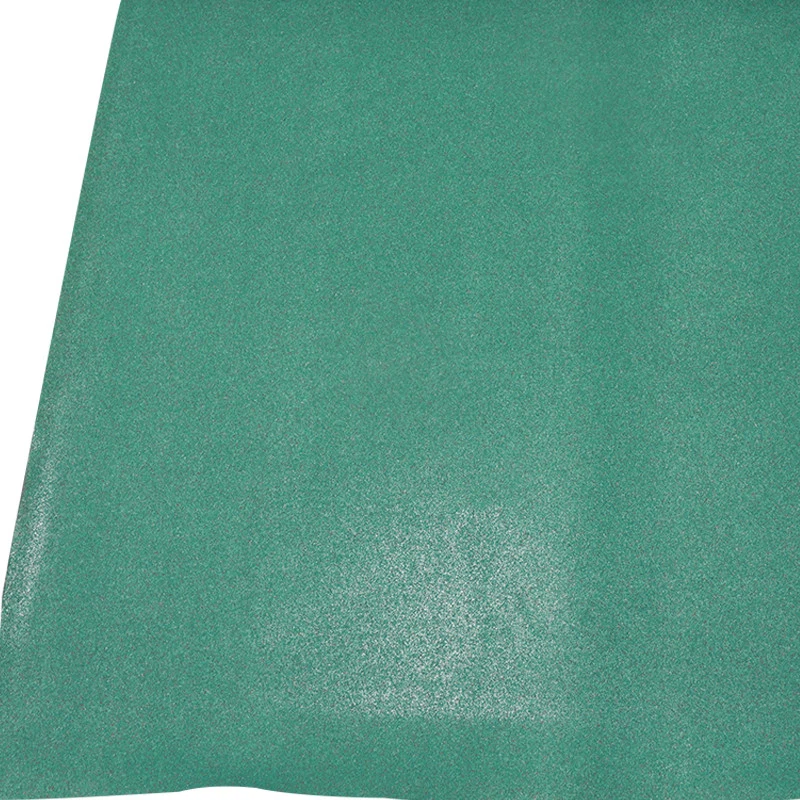
Verify that the type, specification, and thickness of the membrane meet the design requirements (e.g., SBS modified bitumen membranes are commonly used for roofs, and self-adhesive polymer membranes are commonly used for underground projects). Check the membrane surface for damage, holes, or wrinkles, and ensure it is not expired (the shelf life of bituminous membranes is usually 1-2 years).
Supporting materials (adhesives, sealants, hot-melt tools, etc.) must match the membrane. For example, in the cold-adhesion method, it is necessary to confirm that the adhesive is compatible with the membrane material to avoid adhesion failure.
II. Construction Environment Control
Temperature Requirements
For hot-melt membranes (such as SBS), the construction temperature must be ≥-5℃ (temperatures below this may cause the membrane to become brittle and crack during hot melting); for cold-adhesive and self-adhesive membranes, the construction temperature must be ≥5℃ (low temperatures will reduce adhesion, and a heat gun can be used for assistance).
Weather Restrictions
Construction is prohibited on rainy days, snowy days, or in winds above force 5 (rainwater will affect the dryness of the base layer and the adhesion effect, while strong winds may easily cause the membrane to slip or bulge).
III. Laying Operation Specifications
Laying Sequence and Direction
Follow the principle of "first low, then high; first far, then near": first lay areas with concentrated drainage (such as gutters, eaves, internal and external corners), then lay large areas. When the roof slope is ≤3%, lay parallel to the ridge; when the slope is >3%, lay perpendicular to the ridge (to prevent the membrane from sliding down).
Membranes in the same plane should be laid straight, and the overlapping direction of adjacent membranes must be consistent with the direction of water flow (to prevent rainwater from seeping into the lap joints).
Lap Joint Treatment
Lap width: For the hot-melt method, the longitudinal lap must be ≥100mm, and the transverse lap must be ≥150mm; for the cold-adhesion method, the longitudinal lap must be ≥80mm, and the transverse lap must be ≥100mm (specifically in accordance with design or specification requirements; the edge of the membrane must be reserved in full width to avoid insufficient lap after cutting).
Lap joint construction: For the hot-melt method, use a spray gun to uniformly heat the overlapping edge of the membrane (until the bitumen melts and overflows), then compact it while hot; for the cold-adhesion method, evenly apply adhesive, wait until it is no longer sticky to the touch, then bond it, and compact it with a pressure roller (to avoid air bubbles).
Reinforcement of Special Nodes
Additional layers (with a width of ≥500mm, 250mm on each side) must be added at positions such as internal and external corners, pipe roots, and expansion joints. The additional layers should be laid before the large-area membrane to ensure tight sealing of the nodes.
For the root of pipes piercing the roof, the membrane must be turned up to a height of ≥250mm on the pipe, fixed with a metal hoop, and the top must be tightly sealed with sealant.
IV. Post-construction Inspection and Protection
Quality Inspection
After laying, check that the membrane is flat, free of bulging (hollowing areas ≤100cm² and the distance between individual hollows >1m are considered qualified), free of warping, and that the lap joints are tight. If necessary, conduct a water-tightness test (24-hour water storage for roofs, 48-hour full water test for underground projects; no leakage is considered qualified).
Finished Product Protection
After laying, avoid sharp objects (such as nails and stones) from piercing the membrane, and prohibit stacking heavy objects or walking on the membrane surface (especially for uncured membranes).
During the construction of subsequent processes (such as backfilling and laying protective layers), an isolation layer (such as non-woven fabric or wooden boards) must be covered on the membrane surface to avoid damage from mechanical rolling.
V. Safety Precautions
During hot-melt construction, keep away from flammables, equip with fire extinguishers, and operators must wear fire-resistant gloves and goggles; for high-altitude operations (such as on roofs), safety belts must be worn, and scaffolding must be stably erected to avoid falling.
By controlling the above points, the sealing performance and durability of membrane laying can be effectively ensured, and the risk of leakage or damage in the later stage can be reduced. Different types of membranes (such as PVC, TPO and other synthetic polymer membranes) may have special requirements, which need to be refined in operation in conjunction with product instructions.