


Elastomer Coating Waterproofing
Elastic waterproofing paint is a highly effective waterproofing coating widely used in construction and home decoration. It uses polymer materials as a base material, special additives and auxiliaries, and is manufactured through a specialized process. Elastic waterproofing paint effectively prevents water seepage on building walls, roofs, and floors, protecting the building's structure and interior finishes, and extending its service life.

Advantages
1. Strong Waterproofing: Elastic waterproofing paint forms a flexible, seamless waterproof membrane that effectively prevents moisture and liquids from penetrating the building's interior.
2. Strong Weather Resistance: Elastic waterproofing paint exhibits excellent weather resistance, withstanding harsh environments such as sun, rain, wind, and snow, maintaining its waterproofing effect over time.
3. Easy Application: Elastic waterproofing paint offers excellent brushability and adhesion, making it quick and easy to apply and suitable for a variety of building surfaces.
4. Environmentally Friendly and Healthy: Elastic waterproofing paint is made from non-toxic, odorless, and environmentally friendly materials, harmless to the human body, and in compliance with national environmental standards.
5. Beautiful Appearance: Elastic waterproofing paint can be customized with custom colors. After application, the surface is smooth and bright, creating both a protective layer and a decorative effect.
Work Tips
If a two-component elastomeric coating is used, it must be mixed in the proportion recommended by the manufacturer to avoid improper proportions that affect the coating quality. Ensure that the mixture is evenly mixed to avoid bubbles or uneven coating.
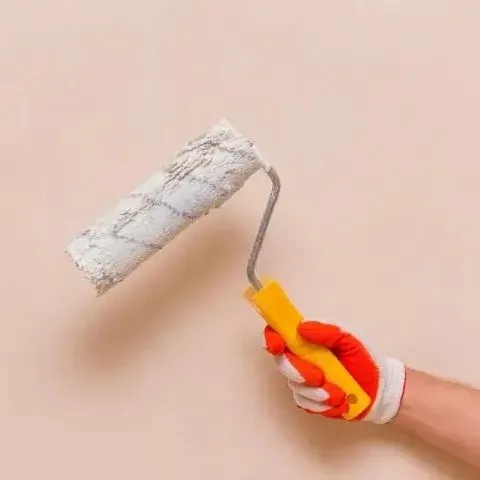
Use tools such as rollers, spray guns or brushes to evenly apply the coating to the base. For larger construction surfaces, spraying can improve efficiency; for smaller or complex parts, brushing or rolling is more appropriate.
After applying the first layer, wait for it to completely dry or cure (usually about 4-6 hours) before applying the second layer. Depending on the thickness requirements of the coating, multiple applications may be required.
When applying each layer, try to use a cross-coating method (for example: the first layer is applied longitudinally and the second layer is applied horizontally) to ensure that the coating is uniform and covers all surfaces.
For joints, corners, pipe crossings and other parts in waterproofing construction such as roofs or basements, special attention should be paid to strengthening treatment. A thick layer of coating can be applied to the joints, or special reinforcement tape can be used for reinforcement.
For detailed locations such as pipes, gutters, and drains, special waterproofing materials or thick coatings are used to ensure no leakage.
Elastomeric coatings generally require 24 hours to cure, but the specific time needs to be adjusted according to the temperature, humidity and coating thickness. It is recommended to avoid bad weather such as heavy rain or strong wind during the curing period.
During the curing period of the coating, avoid any mechanical impact or surface contamination, especially before the coating is fully cured, try to avoid touching or stepping on it.
Transportation And Storage
Many elastomeric coatings contain volatile organic solvents, which are flammable and toxic. During transportation, dangerous goods signs (such as flammable liquid signs, warning signs, etc.) should be properly marked in accordance with relevant regulations, and necessary safety data sheets (SDS) should be provided.
Elastomeric coatings are sensitive to temperature, especially low temperature environments may cause the coating to solidify or deteriorate in performance. Therefore, exposure to extreme temperatures should be avoided during transportation. The ideal transportation temperature range is usually between 5°C and 35°C.
In high temperature environments, the coating may deteriorate or the solvent may evaporate, resulting in impaired coating performance. Therefore, the coating should be avoided from being exposed to direct sunlight or high temperature in the car compartment.
Especially in cold seasons, the coating should be avoided from being exposed to low temperatures. Freezing may cause the viscosity of the paint to increase or delaminate, affecting the subsequent use effect.
Elastomeric coatings should be kept away from moisture, especially in seasons or areas with heavy humidity. Moisture-proof packaging should be used during transportation, and desiccant bags or insulation materials can be added if necessary to reduce the impact of moisture on the paint.
When transporting in the open air, direct contact with rainwater should be avoided. It is best to cover it with a waterproof cloth or store the paint in a dry compartment.
Work Area
Roof waterproofing
1. Flat roof
2. Sloping roof
3. Green roof
Basement waterproofing, basements, underground garages and underground civil air defense projects all require waterproofing. Elastomeric coatings can form a reliable waterproof layer on the base and wall to prevent moisture intrusion.
In residential, commercial and industrial buildings, waterproofing of bathrooms, kitchens and other wet areas is particularly critical. Elastomeric coatings can form seamless, waterproof coatings on the ground and walls to effectively prevent water seepage.
In tunnel construction, elastomeric coatings, as a waterproofing measure, can provide long-term waterproofing effects and adapt to the vibration and deformation of tunnel structures.
Elastomeric coatings are widely used for bridge waterproofing, especially on bridge decks that are subject to large temperature changes and traffic loads.
Hot Tags: hebei ruide elastic paint waterproof, China hebei ruide elastic paint waterproof manufacturers, suppliers, factory, Foundation Coating, Bitumen Coating Waterproofing, waterproofing company, waterproofing material, waterproofing barrier, waterproofing polymer


