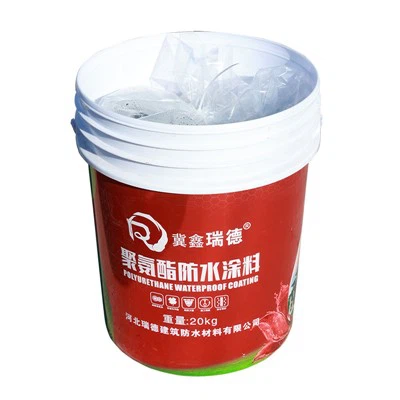
Cement-based penetrating crystalline waterproof coating
Cementitious waterproofing systems contain a Portland cement base (with or without sand) and active waterproofing additives. There are four types of systems: metal systems, capillary systems, chemical additive systems, and acrylic modified systems.
Cementitious systems are effective under both positive and negative water pressure. These materials are applied to concrete, brick or stone surfaces by brush, trowel or spray and become an integral part of the foundation.
All compositions are available in the form of dry mixes and are mixed with water and other components (if any) at the time of application.
Cementitious systems are excellent materials for civil and infrastructure projects.

Waterproofing structural mixtures are used to protect different types of surfaces. Cementitious mixtures are popular due to their affordable price and ease of use. Although concrete can absorb water, it becomes waterproof after hardening, providing a high level of protection.
The waterproofing mixture contains stress cement. It is strong and durable and does not easily deform or crack. It absorbs very little water compared to other brands. The waterproofing material also contains waterproofing additives that increase the plasticity and reliability of the material.
Cement sand waterproofing material, produced in the form of a dry mix. The simplest material, the main component of which is cement;
Latex - more flexible. In addition, the additive increases resistance to cracking and temperature changes. The properties of this material are similar to those of rubber;
Glass - liquid glass is added, which softens the solution and increases its hydrophobicity;
Polymers, including Portland cement and plasticizers. The main advantage of this material is its resistance to compressive and tensile loads. The result is a durable layer that can be used for waterproofing of load-bearing structures.
Advantages
Easy to apply. Using and applying cement mortars and mixtures as waterproofing materials is very simple if you carefully follow the manufacturer's instructions. Use a trowel or a stiff-bristled brush to apply coated cement insulation.
Availability. Most products can be purchased in hardware stores.
No seams or joints. Cement-based coated insulation forms a seamless coating, which has a positive impact on its durability and waterproofing.
No need to dry the substrate. Work can start quickly after pouring the concrete.
Convenient for subsequent finishing. When using cementitious composites, there is no need to build a mortar layer on top of it in order to subsequently install tiles or other finishing materials (unlike membrane and bituminous insulation, it is not recommended to install tiles on top without first installing mortar).
Durability. In most cases, cementitious insulating compounds are not only waterproof, but also resistant to chemicals, abrasion, and atmospheric influences such as frost.
Binders. Waterproof coatings bond well to porous and non-porous surfaces and to new and old concrete.
Work Recommendations
Preparing the base - the first step is to clean the base from loose elements, dirt and dust;
Seal all existing cracks and other defects in the concrete using non-shrinking compounds and expansion sealants;
Pay attention to installing dumbbell-shaped molds (small skirtings made of cement mortar) so that the waterproofing transitions from horizontal to vertical;
This way, weak 90-degree joints can be avoided when the covering transitions from the floor to the wall;
Surface wetting - cement mixtures should not be applied to dry bases. Before installing waterproofing materials, the surface must be wetted to a certain degree, otherwise 100% adhesion of the material to the base may not be achieved;
Material preparation - this procedure is one of the most important, especially for two-component materials. When preparing the mixture, it is necessary to mix dry cement powder with water and other components, as described in the instructions for a specific material. Each manufacturer has its own instructions that must be followed;
Coating insulation installation - the material is applied to the base using the coating method, applying 1 coat with a brush or trowel;
Second layer application - if necessary, after the first layer has solidified, the second layer can be applied using the coating method. The waiting time between the first and second coats depends on the material applied (described in the material description);
Subsequent finishing - If you plan to install finishing elements in the form of gypsum board, plaster or other sheathing after applying the coating cement insulation layer, you must first install the strips, which are directly glued to the finished waterproof layer. This eliminates the need to pass the board through the cement membrane with nails or screws.
Transportation And Storage
During transportation, well-sealed transportation vehicles should be used to avoid rain and moisture to prevent the material from caking or failure.
During loading and unloading, avoid direct contact with the ground or storage in a humid environment.
During transportation, stacking should be reasonable to avoid heavy pressure to prevent packaging damage, causing material leakage or moisture.
During loading and unloading, handle with care to avoid violent collisions to avoid affecting product performance.
When transporting in hot or cold weather, sunshade or insulation measures should be taken to prevent changes in product performance due to extreme temperatures.
When transporting in winter, avoid long-term exposure to low temperatures to prevent the material from freezing and affecting its use.
It should be stored in a dry, ventilated indoor warehouse, avoid direct sunlight and rain, and prevent the material from getting damp and caking.
The warehouse temperature should be maintained between 5℃ and 35℃, and the relative humidity should not exceed 70%.
The general storage period is 6-12 months, which shall be subject to the product instructions. Materials that exceed the shelf life must be tested and qualified before use.
Check the inventory materials regularly to prevent moisture or caking, and clean up expired or damaged products in time.
Application Areas
Can be used on concrete, plaster, gypsum board, brick, wooden surface, particle board and fiberboard. Designed for kitchens, bathrooms, corridors and other dry and wet rooms. It is recommended for coating in kindergartens, educational institutions, medical and preventive institutions and other places that adopt wet disinfection systems.
Hot Tags: hebei ruide cement-based penetrating crystalline waterproof coating, China hebei ruide cement-based penetrating crystalline waterproof coating manufacturers, suppliers, factory, waterproofing surfactant, long lasting waterproof paint, waterproofing proven, waterproofing unit, waterproofing scraper, waterproofing caulking gun